Building Nova AI was not a prompt engineering exercise. It was a knowledge capture project. Here is how we encoded the judgment of 20+ institutional investors into a system that deploys that intelligence on demand.
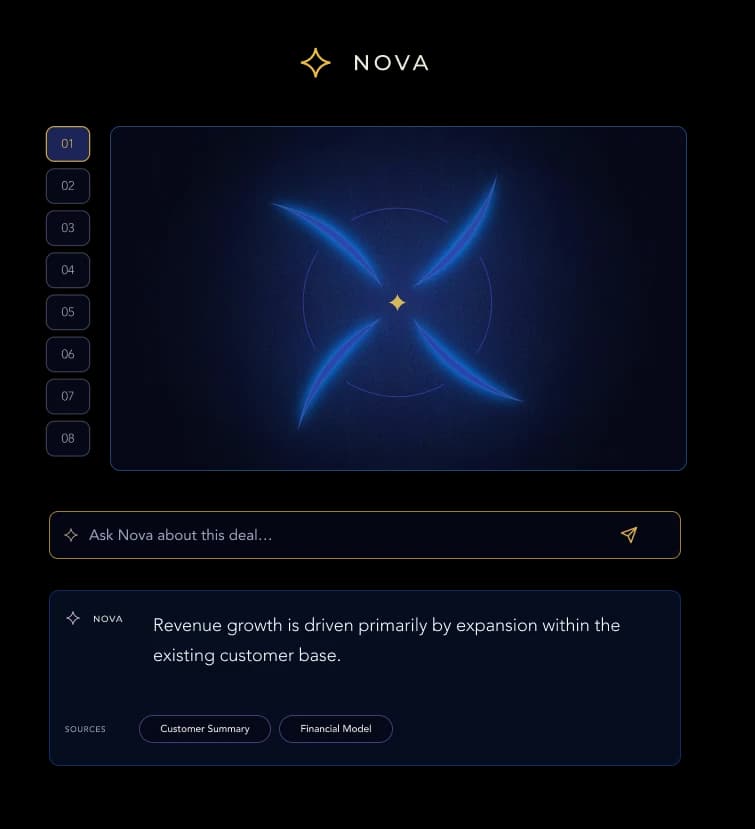
Nova is the intelligence built into Investor Hive. She reads the full data room on a deal, runs the eight-section diligence, and answers questions in plain language. What most people do not see is how she came to hold that judgment. Building Nova was not a prompt engineering exercise. It was a knowledge capture project, and it is the part of Next Edge Alliance I am asked about most.
Here is the short version. We did not start with a model. We started with people. The founding investors of the Alliance have spent decades deploying capital, closing transactions, and living with the outcomes. Our co-founder alone carries three decades in institutional investing, more than $31 billion deployed across 386 transactions. That judgment was real long before we wrote a line of code. The open question was whether it could be captured without being flattened.
Start with the questions, not the model
Every experienced investor has a set of questions they ask on every deal. They rarely write them down. They ask them in the first meeting, in the margins of a deck, and in the pause before a term sheet. We asked the founding investors to say those questions out loud. Then we asked why. Why that question, why in that order, and what answer would make them walk away. The why mattered more than the question. It is where the judgment lives.
The questions clustered. They fell into the same eight areas, whatever the sector and whatever the stage. Market, team, product, traction, economics, structure, risks, and conviction. The order mattered too. Nobody wanted to spend time on economics before they understood whether the team could execute. That ordering, and the weight each investor put on each section, is the eight-section diligence Nova runs today. It did not come from a textbook. It came from people who had been through hundreds of transactions.
The judgment was real long before we wrote a line of code.
What they looked for and what they ignored
Capturing what investors look for was only half the work. The other half was capturing what they ignore. A polished deck told them very little. A founder who could explain a bad quarter told them a great deal. Revenue growth by itself meant less than where the growth came from. A red flag in the structure outweighed a strong story about the market. These habits are not opinions. They are pattern recognition earned through real outcomes, and they are the reason an experienced investor can pass on a deal in minutes.
We turned each of those habits into something a system could act on. We asked what each investor read first and what made them stop reading. We asked which findings were red flags and which were only questions. We asked which comparable outcomes they trusted and which they did not. Each answer became a rule, a check, or a weighting. Nova was trained exclusively on that collective judgment, not on public data. There is nothing in her that the founding investors would not recognize as their own.
Nothing went into Nova that a founding investor had not said and defended.
How Sanj built the system
Sanj Lalchandani, our Chief Technology Officer, architected the system that holds all of this. He has spent more than twenty-five years building enterprise-grade AI platforms, and he made one decision early that shaped everything after it. Nova would be private. She runs on our own AI infrastructure, in a closed loop, and she never trains a public model. A member's questions, the deal documents, and the judgment of the founding investors stay inside Investor Hive. That was not a feature we added later. It was the first requirement.
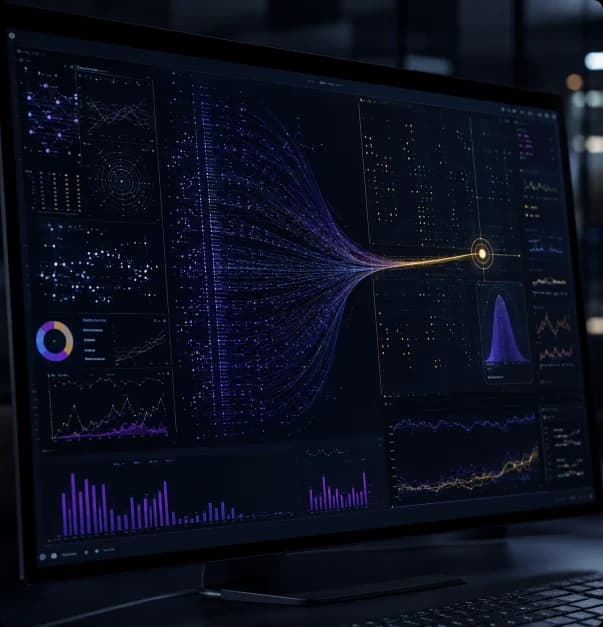
On that foundation, Sanj built the eight-section diligence as a structured process rather than a single prompt. Nova reads the full data room first, the financials, contracts, cap table, and customer data, and cross-references them before she scores anything. Each section is scored against comparable outcomes. When a member asks her about financials, market dynamics, competitive positioning, or risk, she answers from that record in plain language. She can interrogate a financial model the same way.
What Nova changes for a member
The practical effect is time. Work that used to run six to nine months now takes days. Roughly ninety percent of investing is process, and Nova and the rest of Investor Hive handle that part. The cost of dead deals drops close to zero, because a deal that would never have passed the founding investors is identified before anyone spends a month on it. What is left for the member is the part no technology replaces. Discernment, timing, and the decision itself. This is what we mean by AI Active Impact Investing.
I want to be precise about what Nova is not. She is not a fund manager, and she does not make the call. She is not generic chat with a finance vocabulary. She is the judgment of more than twenty institutional investors, captured carefully and put to work on the deal in front of you. Any one investor sees the deals that cross their own desk. The Hive sees across all of them, and Nova is how a member reaches that view.
Why we did it this way
I come from publishing and media, not from institutional investing. I spent years being told the idea behind Next Edge Alliance was unrealistic. What convinced me it was not was watching how much knowledge sat inside a handful of people and how little of it ever traveled. No fund holds it. No data terminal sells it. Encoding it into Nova was the only way we found to let it move into every deal that enters the Alliance. That is the heart of the private capital markets exchange we are building, and it is only the beginning.
Andréa Albright
Co-Founder & CEO,
Next Edge Alliance

Andréa Albright
Co-Founder & Chief Executive OfficerAndréa is an entrepreneur, publisher, media strategist, and champion for visionary founders. She created Next Edge Alliance to put trusted relationships, institutional judgment, and private-market opportunity in the same room.